
The X Safety team conducted an investigation into suspected Chinese inauthentic accounts involved in influence operations:
We identified a bot farm of approximately 200,000 accounts. Within this farm, we found 200 accounts posting in a manner that could manipulate a legitimate… pic.twitter.com/Mj0SqerdlH
— Global Government Affairs (@GlobalAffairs) August 28, 2026
The X Safety team conducted an investigation into suspected Chinese inauthentic accounts involved in influence operations:
We identified a bot farm of approximately 200,000 accounts. Within this farm, we found 200 accounts posting in a manner that could manipulate a legitimate… pic.twitter.com/Mj0SqerdlH
— Global Government Affairs (@GlobalAffairs) August 28, 2026
Why Data Centers Are Suddenly a Big Political Fight
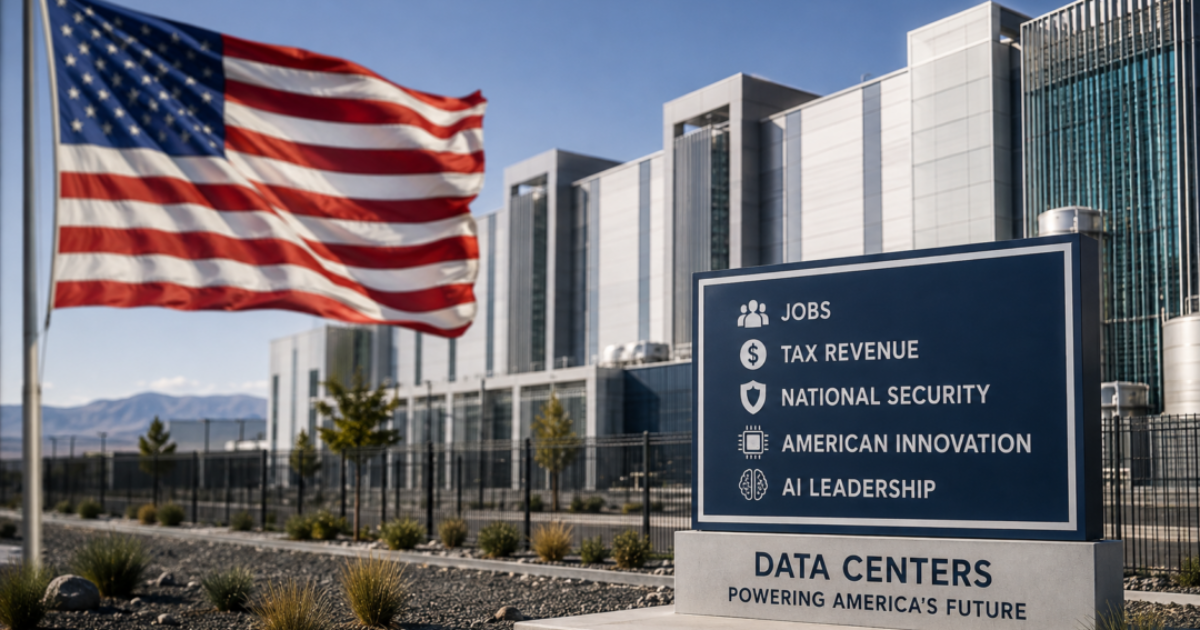
Angry crowds have been showing up at government meetings demanding bans on data centers, and the debate is getting louder by the day. The source report argues that while many Americans have real concerns about power use, local control, and fast growth, it is not realistic to pretend data centers are going away. Once a major technology becomes part of daily life, the country does not simply toss it back in the box and return to the old way. Data centers now power websites, photos, videos, cloud programs, apps, and artificial intelligence. Like it or not, the digital genie is out of the bottle, and no city council speech is likely to stuff it back in.
Trump’s Case for Building More of Them
The report says President Trump supports data center construction because modern military operations require artificial intelligence, and AI needs serious computing power. It also points to the Defense Production Act of 1950, which gives the president broad authority over industry when needed for national defense. The argument is simple: because data centers are connected, their work could be redirected quickly to support defensive or offensive military needs if America faced a crisis. The report also says memorandums of understanding could help make sure data centers can shift their work fast when national security is on the line.
AI Is Not Just Chatbots and Homework Cheats
The report makes clear that AI has risks, including cheating, job disruption, surveillance, and abuse by bad actors. Those concerns are real, but it also argues that AI can serve major public interests. It says AI is being used to spot criminal activity in Medicare and Medicaid billing, which can expose fraud and dry up money streams tied to crooked operators. It also says AI is sorting through billions of records to identify illegal aliens, where they work, where they live, who employs them, and which welfare programs they access. According to the report, deportations can reduce the number of Democrat voters, open jobs for American citizens, free up housing, and put downward pressure on housing costs.
Science, Medicine, and the Race for Better Tools
Beyond politics and law enforcement, the source points to medical and scientific uses for AI. It says AI is already helping find new uses for existing drugs and helping design new drugs aimed at cancer, high blood pressure, infant mortality, and regenerative medicine. It also says AI is reviewing scientific papers to catch fraud and keep weak studies from shaping policy or research. In plain English, that means computers can help spot junk before it gets dressed up in a lab coat and treated like gospel. The report also says AI is helping design new technology and improve techniques already in use.
The China Angle Conservatives Should Not Ignore
The source warns that America is racing China for AI dominance, and China does not face the same public protest problem. In China, citizens are not free to organize against data center construction or much of anything else, so the Chinese Communist Party can build where it wants, when it wants, and how it wants. The report says China is running a major influence operation in the United States to support anti-data-center protests and activism. It cites Newt Gingrich saying, “The anti-data center movement is a gift to Beijing,” and warning that if it succeeds, “it will virtually guarantee that the Chinese Communists will dominate the development of artificial intelligence.”
Bot Farms, Bad Stats, and Strange Political Company
The report says a CCP bot farm was recently uncovered with 200 accounts pushing anti-data-center propaganda on X. It argues that this kind of bad information feeds local activism, public meeting claims, and social media posts that repeat weak statistics. It also says conservatives fighting data centers are sharing the same side of the issue with groups such as Democrat Socialists of America, Party for Socialism and Liberation, People’s Dispatch, Arabella Advisors, the Neville Singham network, and the Cuban Institute for Friendship with the People. That does not mean every local critic is acting in bad faith, but it should make Republican leaders at least pause before marching in the same parade as Beijing’s cheering section.
What Trump’s Data Center Plan Calls For
The report describes Trump’s plan as focused on two main ideas. First, data centers should pay their own electric costs, plus a bit more so regular ratepayers can see costs come down. It says leading data center companies have already signed Trump’s Ratepayer Protection Pledge. Second, the plan would make construction easier by cutting regulation and speeding up permits. Supporters argue that if America needs data centers for AI, defense, medicine, jobs, and global competition, then the country should not bury projects under red tape while China builds at full speed. Bureaucrats may love paperwork, but paperwork does not win a technology race.
The Economic Stakes Are Big
The source says there are more than 10,000 data centers worldwide, and that 64 percent of those in the United States are in rural areas. It also says data centers have created 4.7 million jobs, $404 billion in annual payroll, and $727 billion in contribution to the U.S. economy. Those are not small numbers, especially for communities that need jobs and tax base instead of another lecture from activists who already have reliable broadband, cloud storage, and phone apps. The fight over data centers is really a fight over who controls the future of computing, and whether America leads it or lets the Chinese Communist Party take the wheel.
WE’D LOVE TO HEAR YOUR THOUGHTS! PLEASE COMMENT BELOW.
JIMMY
Find more articles like this at steadfastandloyal.com.