
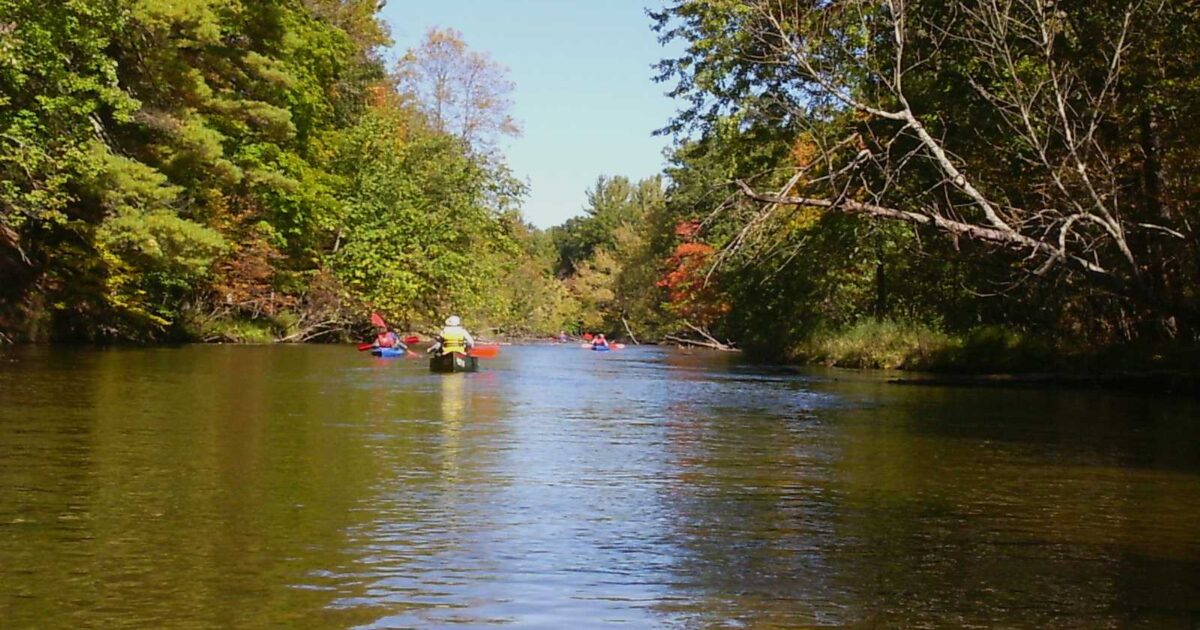
Michigan river contamination is now a statewide warning for anyone who swims, kayaks, fishes, or expects a public waterway to be safe. A joint investigation by Bridge Michigan, later picked up by CBS News Detroit, reports that an estimated 75 percent, or three out of every four, of Michigan’s rivers and streams are contaminated with fecal matter at levels violating basic water quality standards. The estimate comes from results covering roughly half the state’s waterways, so it is not a complete test of every river. Still, it is a serious finding for a state whose outdoor recreation reputation depends on clean water.
Molly Rippke, who leads E. coli testing for Michigan’s Department of Environment, Great Lakes, and Energy, said the available results suggest about 75 percent likely exceed fecal contamination limits. The investigation reports that more than half of those tested often have levels too high for partial-body contact, including wading or kayaking. Rachel Cuschieri-Murray of the Eaton Conservation District described the stretch of the Grand River near the state Capitol in blunt terms: “You shouldn’t even put your hands in. It’s that dirty.” That is a warning about a waterway near Michigan’s government center, not a distant industrial site.
Michigan River Contamination Reaches Across the State
The reported contamination reaches well beyond the Grand River. The investigation names northern waterways such as the Boardman and Pere Marquette, along with the Kalamazoo, the Rouge in metro Detroit, and smaller tributaries across the southern Lower Peninsula. That list describes a pattern spread across different parts of the state, not a single isolated trouble spot. The estimate should not be stretched into proof that every river is equally polluted. What is clear is that testing found enough serious contamination to raise a statewide concern, while the full picture remains incomplete.
Bridge Michigan’s investigation identifies several likely routes into the water. They include runoff carrying animal manure from farms and livestock operations, aging or malfunctioning home septic systems, sewage overflows, deteriorating wastewater infrastructure, animal waste, and polluted stormwater. Those sources do not point to a simple villain or a quick fix. They point to a management problem involving farms, homes, wastewater systems, and the state’s ability to monitor conditions. Public warnings may help people avoid unsafe contact, but warnings alone do not repair septic systems, stop overflows, or replace failing infrastructure.
One Full-Time Employee for Michigan’s E. Coli Testing
The staffing picture makes the problem even harder to defend. EGLE, the state agency tasked with keeping Michigan’s water clean, currently has just one full-time employee dedicated to monitoring river E. coli across the entire state. Megan Tinsley, water policy director for the Michigan Environmental Council, called it “just wild” that decision-makers have treated the situation as acceptable. The reporting does not explain why the state has assigned only one full-time employee to this work. A statewide contamination estimate deserves more than a bare-minimum response.
The public-health stakes are not theoretical. State figures say at least 12.4 million people spend time on Michigan rivers each year, and the contamination described can expose them to bacteria, viruses, and parasites linked to diarrhea, vomiting, fever, and worse. Experts say thousands may be sickened annually, although many cases are blamed on food poisoning or other causes. One study linked E. coli outbreaks to average home-value drops of $13,000, adding an economic cost to the health risk. A waterway that cannot safely support ordinary recreation can damage more than a weekend outing.
Whitmer’s Record Faces a Basic Accountability Question
Gretchen Whitmer has occupied Michigan’s highest office since January 2019, and the report puts a basic accountability question in front of her administration. It does not establish that Whitmer personally caused the contamination or assign every pollution source to state government. It does show a serious statewide estimate, several contributing pathways, and one full-time employee assigned to monitor E. coli. For Michigan families and visitors, debates over green-energy mandates matter less than whether they can safely wade, kayak, or fish. State officials need to explain how they will measure the remaining waterways and respond to risks already identified.
WE’D LOVE TO HEAR YOUR THOUGHTS! PLEASE COMMENT BELOW.
Find more articles like this at feedsnorth.com.