
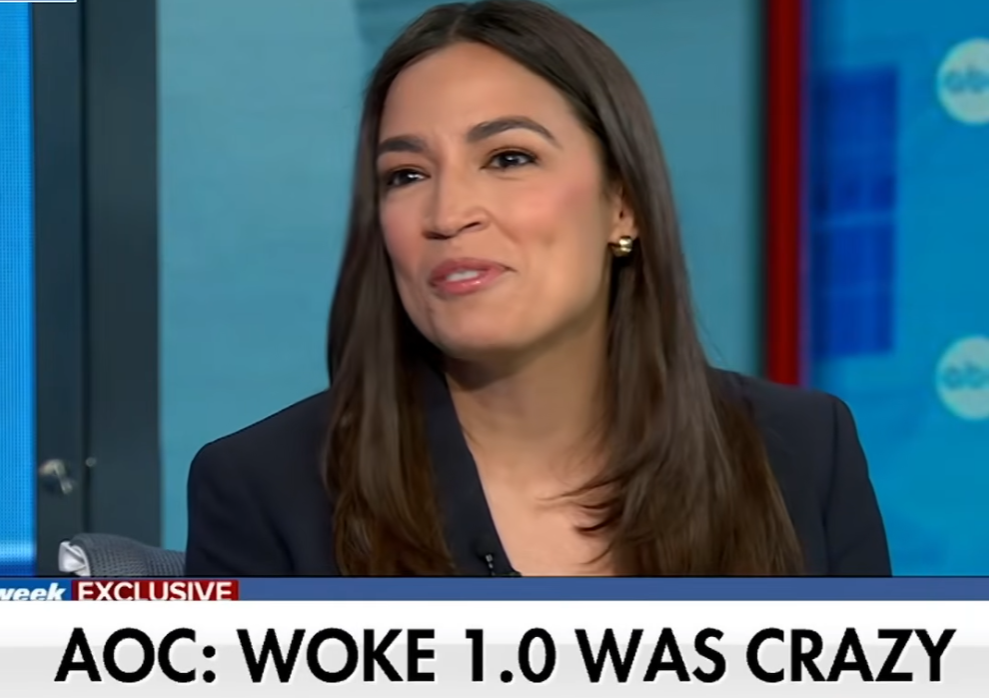
Apparently, woke needed a software update. After several years of Americans being told that defunding police was enlightened, DEI was essential, biological sex required a graduate seminar to understand, and anyone questioning any of it probably needed sensitivity training, the political Left has discovered something remarkable: voters weren’t buying it. Enter Woke 2.0. The terminology is changing. The sales pitch is improving. And even Alexandria Ocasio-Cortez now acknowledges that some of the rhetoric from the Woke 1.0 era isn’t rhetoric she’d use today. The question conservatives should be asking isn’t whether woke died. It’s whether woke finally hired a decent marketing department.
Watch AOC Explain the Woke 1.0 Problem at About the 2:00 Mark
Watch the video embedded with this article and jump to approximately 2:00, where AOC discusses what she calls the Woke 1 era. She recalls a local councilman saying, “Woke one was crazy.” AOC then describes the COVID period as a time when there was a huge opening of the political “Overton window,” allowing Americans to entertain policies that previously would have been considered far outside the mainstream. Then comes the important admission: “Rhetoric in that time is not rhetoric that we would use today.” That’s quite a sentence. AOC isn’t renouncing the progressive movement or saying every policy was wrong. She’s acknowledging something much more politically useful: the language needs work. Recent reporting has similarly described progressives as backing away from some of the rhetoric associated with Woke 1.0 while emphasizing issues with broader appeal.
Woke 1.0 Wasn’t Exactly Subtle
Remember 2020? Conservatives certainly do. In the aftermath of George Floyd’s murder, the country experienced an explosion of progressive activism involving race, policing and criminal justice. “Defund the police” became a national slogan, although supporters disagreed about whether that meant reducing police budgets, transferring responsibilities to social programs or, for some activists, fundamentally replacing traditional policing. Meanwhile, corporations rushed into DEI programs, universities embraced increasingly elaborate theories about identity and privilege, and Americans suddenly discovered that everything from pancake syrup to children’s cartoons apparently required a social-justice audit. Woke 1.0 wasn’t hiding in the basement. It kicked down the front door, demanded you state your pronouns and asked whether your lawn mower was sufficiently anti-racist.
AOC Wasn’t Shy About Defunding Police Back Then
Here’s where today’s revision gets interesting. In June 2020, when New York City officials proposed cutting roughly $1 billion from the NYPD budget, AOC complained that it didn’t go far enough. Her words were refreshingly unambiguous: “Defunding police means defunding police.” She argued that moving expenses around wasn’t genuine defunding and said the fight to defund policing continued. Earlier that month, she had also pushed back against the idea that activists should repackage “defund” to make it more politically palatable to suburban swing voters. Six years later, we’re hearing that the rhetoric of that period isn’t rhetoric she’d use today. Funny how elections can improve a politician’s vocabulary.
Conservatives Were Told We Just Didn’t Understand
One of the strangest parts of Woke 1.0 was watching Americans being told not to believe what they were hearing. “Defund the police” didn’t necessarily mean defund the police, except when AOC explicitly said defunding police meant defunding police. Critics who objected to progressive language were frequently accused of deliberately misunderstanding nuanced policy proposals. To be fair, the slogan always covered a range of positions, from shifting some police money toward social programs to far more sweeping abolitionist ideas. But politically, even prominent Democrats recognized the problem. Former House Democratic whip Jim Clyburn warned after the 2020 election that “defund the police” was hurting Democrats. Apparently, somewhere between Woke 1.0 and Woke 2.0, the focus groups finally got their revenge.
So What Exactly Is Woke 2.0?
There isn’t a Woke 2.0 headquarters issuing membership cards. The phrase has developed as shorthand for a possible second phase of progressive politics. WIRED described “Woke 2” earlier this year as a concept circulating among progressives hoping for a renewed political and cultural movement during Trump’s second presidency. Other commentary describes it as less obsessed with the terminology and social-media policing associated with Woke 1.0 and more interested in economic issues and real-world political organization. In other words, Woke 2.0 may not demand that you memorize 47 new terms before breakfast. It may simply ask whether you’re angry at your landlord, your health insurer, your employer and the billionaire who owns the company down the street. That’s a much easier sales pitch.
Woke 2.0 May Be Smarter Than Woke 1.0
And conservatives shouldn’t laugh this off. Woke 1.0 frequently sounded like it was designed by a committee of sociology professors who hadn’t spoken to a plumber since 1998. Woke 2.0 potentially speaks a much more effective language: affordability, housing, wages, childcare, healthcare, corporate power and economic inequality. That’s the shift worth watching. Vox, hardly a conservative publication, recently described progressives as moving away from some identity-focused messaging toward class and economic populism with broader appeal. You don’t have to agree with the solutions to recognize that telling a family “your grocery bill is too high and we’re going to fix it” is politically stronger than telling them to examine their unconscious privilege.
That’s Why Woke 2.0 Could Be More Dangerous Politically
Woke 1.0 often provided its opponents with the campaign commercial free of charge. Conservatives could simply play the clip. Woke 2.0 could be tougher. Imagine the same progressive movement stripped of its most alienating vocabulary and repackaged around kitchen-table economics. Instead of beginning with race, gender and identity, begin with rent. Instead of “defund the police,” talk about affordable childcare. Instead of lecturing voters about terminology, talk about billionaires getting richer while families struggle to buy groceries. The policy solutions may still involve much larger government, higher taxes, redistribution and greater federal control, but the advertisement sounds considerably better. That’s not an ideological surrender. That’s Marketing 101.
AOC Seems to Understand the Upgrade
This is why AOC’s comments matter beyond one amusing “Woke one was crazy” sound bite. She’s one of the most influential politicians on the American Left, and she appears to understand that the rhetoric of 2020 carries baggage. Recent reporting has portrayed her comments as part of a broader attempt to reconsider controversial positions associated with that era, particularly policing. Even some voices on the progressive Left aren’t happy about it. Critics have accused AOC and other progressive politicians of retreating from earlier commitments to police defunding and abolition. That’s important because it demonstrates that conservatives aren’t simply imagining the shift. People on AOC’s own ideological flank see it too.
But Changing the Sales Pitch Isn’t the Same as Changing the Product
This is the distinction Republicans need to hammer home. If a politician says, “I was wrong about defunding police,” that’s a policy change. If a politician says, “We wouldn’t use that rhetoric today,” that’s a communications change. Those are not the same thing. Maybe AOC genuinely has reconsidered some positions. People are allowed to change their minds. In fact, we’d like politicians to do it occasionally. But voters deserve specifics. What policies were wrong? Which ones remain? What would you do differently today? “We wouldn’t phrase it that way anymore” is not an answer. Bud Light learned that changing the label doesn’t necessarily change what’s inside the can.
Conservatives Shouldn’t Make the Opposite Mistake
There’s another trap here for Republicans. If conservatives respond to every discussion about healthcare costs, housing prices, wages or childcare by yelling “SOCIALISM!” and heading home for dinner, Woke 2.0 could work brilliantly. Those economic problems are real. Americans really are worried about affordability. Young adults really do struggle with housing. Families really do get hammered by childcare expenses. AI really may disrupt employment. Conservatives need better answers than mocking AOC. Free markets, economic growth, lower taxes, affordable energy, regulatory reform, home construction, small-business growth and fiscal sanity need to be explained in terms of how they improve ordinary people’s lives. Otherwise, progressives will happily fill that vacuum with government programs.
Woke 1.0 Gave Conservatives an Opportunity — Woke 2.0 Gives Them a Warning
The political lesson of Woke 1.0 isn’t simply “the Left was crazy.” It’s that movements lose voters when ideology becomes more important than common sense. Republicans aren’t immune from that phenomenon either. AOC and other progressives appear to have recognized that at least some of the language associated with 2020 was politically damaging. Conservatives would be foolish to assume that means progressivism has disappeared. The smarter assumption is that its advocates learned something. Woke 1.0 walked into the room screaming. Woke 2.0 may knock politely, ask how much you’re paying for groceries and offer to tax your billionaire neighbor.
Woke Isn’t Dead — It Got a Software Update
So yes, let’s welcome Woke 2.0. The bugs have been patched. The interface has been cleaned up. “Defund the police” has been removed from the home screen. Economic populism is now prominently displayed. Identity politics may be running quietly in the background. And somewhere deep in the terms and conditions you’ll probably still find plenty that conservatives won’t like. AOC has given us an unusually revealing glimpse into this political evolution when she acknowledges that the rhetoric of Woke 1.0 isn’t rhetoric she’d use today. Believe her. The rhetoric is changing. The conservative mistake would be assuming the ideology necessarily changed with it.
WE’D LOVE TO HEAR YOUR THOUGHTS! PLEASE COMMENT BELOW.
JIMMY
Find more articles like this at steadfastandloyal.com.
h/t: Steadfast and Loyal