
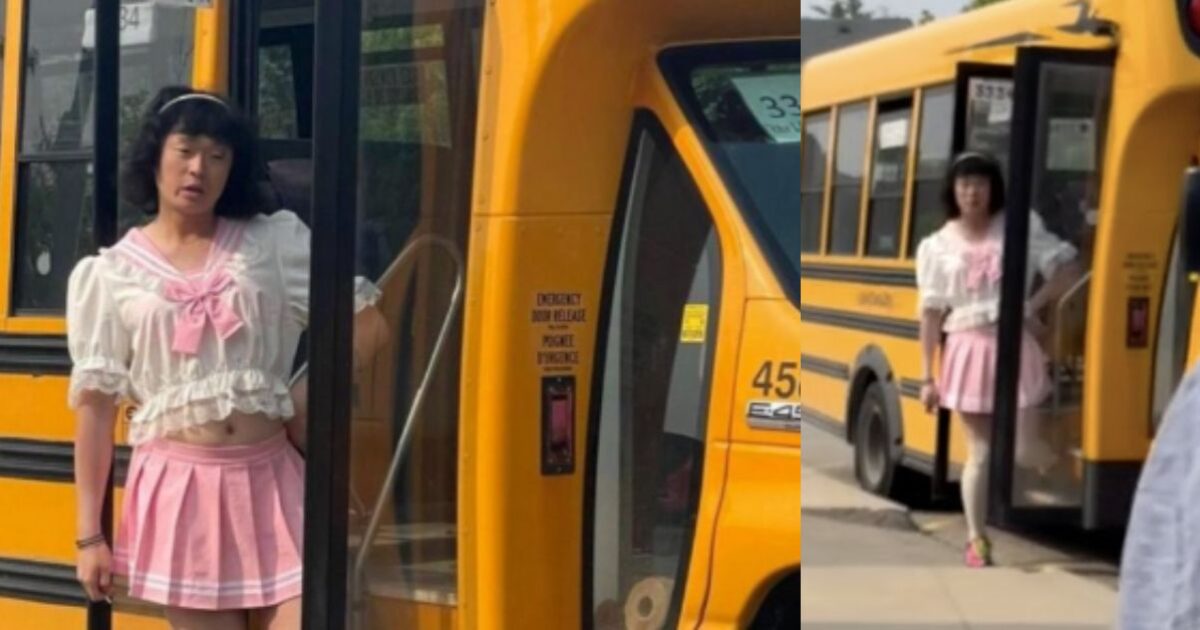
Parents Questioned the Driver’s Display
An Ontario school bus driver identified in tribunal documents only as L.Z. worked for Landmark Bus Lines and transported students to St. Michael the Archangel Catholic Elementary School in Woodbridge. In 2025, parents confronted the driver outside the school after filming the driver wearing a short pink skirt, a white frilly blouse with a large bow, thigh-high stockings, and a headband. A paper sign in the windshield read “Lolita Line.” During the exchange, a parent asked whether the driver had picked up children dressed that way. The driver answered, “I do this every day, and I don’t think… there is an issue,” then confirmed it after the question was repeated. When a parent asked why the route carried the “Lolita Line” name, the driver did not answer.
School Board Removed the Driver From the Route
The route name drew particular concern because “Lolita” is widely associated with Vladimir Nabokov’s novel about an adult man’s sexual obsession with a 12-year-old girl. The term is also often used in discussions about the sexualization of children, making the sign especially troubling to parents whose children were passengers. The York Catholic District School Board notified Landmark Bus Lines about the incident. Landmark removed the driver from that route and told the board the driver would not be assigned to any of its schools in the future. Board communications described the matter as resolved. That administrative response, however, did not end the dispute.
Human Rights Complaint Alleges Discrimination
L.Z. later filed a complaint with the Human Rights Tribunal of Ontario against Landmark Bus Lines and the York Catholic District School Board. The complaint alleges discrimination based on ethnic origin, gender identity, and sex. Tribunal documents identify the applicant only by initials because L.Z. requested a publication ban, which the tribunal granted on October 13. The order refers to L.Z. as a “transgender woman” and cites concerns about backlash from negative media attention. The applicant argued that keeping the name and personal details private had been necessary for safety. The order also records claims of possible physical harm, intimidation, and harassment tied to commentary on social media and in news outlets. Those statements describe the applicant’s allegations and the basis for the privacy request, not a ruling on the underlying discrimination claims.
Publication Ban Made the Case Public
The case became public after the tribunal published its publication-ban decision on October 23. A National Post report noted that the tribunal does not post upcoming hearings online, unlike human-rights tribunals in British Columbia, Alberta, and Manitoba. Without the published decision, the public would have had little practical way to know the complaint was on the docket. The decision says the applicant had faced threats and discriminatory labels linked to what it calls transphobic stereotypes. The privacy order protects L.Z.’s identity, but it does not decide whether discrimination occurred. The available account also does not establish the driver’s motives for the outfit or the route’s name.